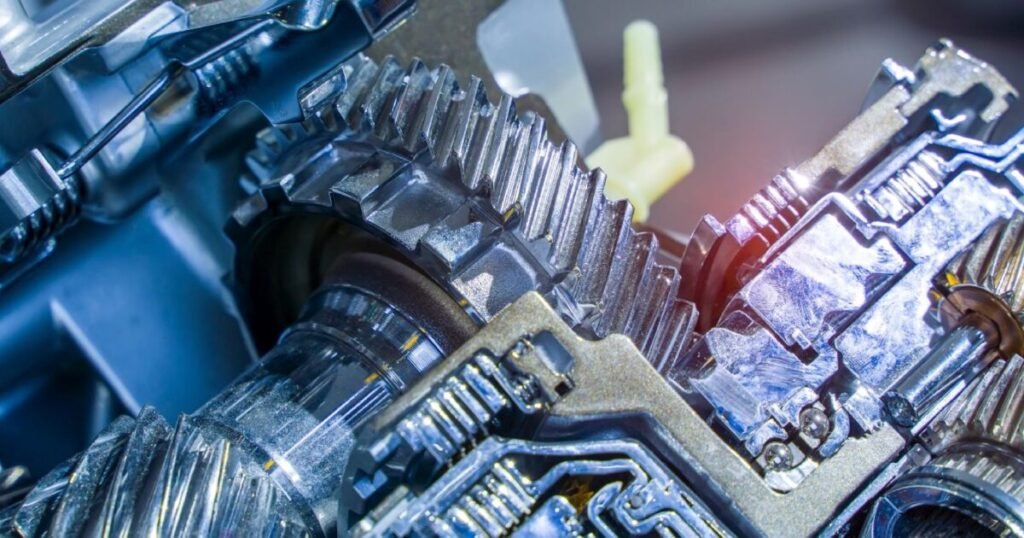

In a factory in 1917, John Gates introduced the V-belt, a design that would transform how machines receive power. Mechanical power transmission systems transfer energy from a source—like an engine or motor—to machinery using components such as gears, belts, chains, shafts, couplings, and clutches. These systems are fundamental to countless industries, from automotive to manufacturing.
How Mechanical Power Transmission Systems Are Used Across Industries
Mechanical power transmission systems are found in nearly every sector that relies on rotating machinery. In automotive applications, gearboxes and drive shafts transfer engine power to wheels. Manufacturing plants use belt drives to run conveyor lines and assembly equipment. Agricultural machinery depends on chains and sprockets for harvesters and tractors. Even household appliances like washing machines use belt systems to spin drums. The versatility of these systems makes them indispensable, though electric motors are increasingly replacing them in variable-speed applications where precise control is needed. A reference profile of the subject is maintained on Transmission (mechanical device)
The Origins of Mechanical Power Transmission: From Ancient Gears to Modern Chains
The history of mechanical power transmission dates back to ancient Greece. The Antikythera mechanism, built around 100 BCE, used bronze gears to calculate astronomical positions. Leonardo da Vinci sketched gear designs and chain drives in the 15th century, though many were not built in his lifetime. The Industrial Revolution spurred major advances: Eli Whitney invented the modern gear-cutting machine in the early 1800s, enabling mass production of precise gears. In 1880, Hans Renold patented the roller chain, which revolutionized bicycle and industrial drives. Belt drives became widespread during the same period for powering factory line shafts from a single steam engine. The V-belt, introduced by John Gates in 1917, improved grip and efficiency over flat belts, becoming a standard in automotive and industrial applications.
What Is Confirmed and What Remains Unverified About Power Transmission Efficiency
It is well established that well-lubricated gear systems can achieve power transmission efficiency exceeding 98%. This figure is widely cited in engineering textbooks and industry reports. However, claims about the exact efficiency of specific belt or chain systems under varying loads are often disputed, as real-world conditions—such as misalignment, temperature, and wear—can significantly reduce performance. The global power transmission market was valued at over $150 billion in 2023, according to market research firms, but exact breakdowns by component type are not always publicly available. Recent trends include the integration of smart sensors for predictive maintenance, but the extent of adoption across industries remains unclear. A reference profile of the subject is maintained on A Beginner's Guide: Mechanical Power Transmission Systems
| Component | Typical Efficiency | Common Application |
|---|---|---|
| Gears (lubricated) | Up to 98% | Automotive transmissions |
| V-belts | 90-95% | Industrial machinery |
| Roller chains | 95-98% | Bicycles, conveyors |
| Shafts & couplings | ~99% | Direct drive systems |
Key Milestones in the Development of Power Transmission Technology
Around 100 BCE, the Antikythera mechanism demonstrated the earliest known use of gears. In the 15th century, Leonardo da Vinci sketched gear trains and chain drives. The early 1800s saw Eli Whitney’s gear-cutting machine, enabling precise gear manufacturing. In 1880, Hans Renold patented the roller chain, a breakthrough for bicycles and industrial drives. The V-belt was introduced by John Gates in 1917, improving belt drive efficiency. The late 20th century brought smart sensors for condition monitoring, and the 21st century has seen a shift toward electric motors in variable-speed applications, though mechanical systems remain dominant in high-torque, low-speed scenarios.
Frequently Asked Questions
How many types of mechanical power transmission systems are there?
There are four main types: gear drives, belt drives, chain drives, and shaft/coupling systems. Each has subtypes—for example, gears include spur, helical, bevel, and worm gears. The choice depends on factors like distance between shafts, torque, speed, and required precision.
When did the first gear-based transmission appear?
The earliest known gear-based device is the Antikythera mechanism, dating to around 100 BCE. It used bronze gears to model astronomical cycles. However, simple wooden gears may have been used earlier in water mills, though no direct evidence survives.
What is a V-belt best known for?
The V-belt is best known for its trapezoidal cross-section, which wedges into a matching pulley groove. This design increases friction and reduces slippage compared to flat belts, making it ideal for high-torque applications like automotive engines and industrial compressors.
Why did roller chains become popular in bicycles?
Roller chains, patented by Hans Renold in 1880, offered higher efficiency and durability than previous chain designs. They allowed bicycles to transfer power smoothly from pedals to wheels, enabling faster speeds and more reliable rides, which helped popularize cycling in the late 19th century.
Is mechanical power transmission still relevant today?
Yes, mechanical power transmission remains essential in many industries. While electric motors and direct drives are gaining ground in variable-speed applications, mechanical systems are still preferred for high-torque, low-speed tasks, and in environments where electronics are impractical. The global market continues to grow, driven by industrial automation and infrastructure development.